Who is Rob Plijnaar?
Rob Plijnaar is a versatile native of Utrecht with a passion for entrepreneurship, photography and sport. He is a hotelier, photographer and ultramarathon runner who spent many years pushing his physical and mental limits, from the Sahara Desert to the North and South Poles.
Hotelier
Together with his brothers, Rob is a director of Hotel Mitland in Utrecht, the Netherlands. The family business was founded in 1921, initially as a tea garden and later becoming a tennis park. In the 1970s, the business expanded with the addition of a bowling centre and restaurant. Another major step followed in the 1980s, when Mitland developed into a modern four-star hotel with extensive meeting and conference facilities.
Today, the family business has been in existence for more than a century. Throughout the generations, hospitality, entrepreneurship and a commitment to continuous innovation have remained at its heart.
Photography
Photography has been one of Rob's great passions since his youth. What began as a hobby gradually became an important part of his professional life. For many years, Rob was responsible for photography used in the promotion of Hotel Mitland. His camera has also been a constant companion during his sporting adventures.
His photographs tell the stories of remarkable journeys, impressive landscapes, sporting achievements and unforgettable encounters.
Ultramarathon Runner
With his parents running a tennis park, a future in tennis seemed a natural choice. However, a skiing accident in the late 1970s brought those ambitions to an end.
In 1980, Rob discovered running. He started with shorter distances, but before long progressed to half-marathons, full marathons and triathlons. The challenges continued to grow. At the age of 57, he decided to push his limits even further and began taking part in some of the world's toughest marathons and ultramarathons.
Among the events he completed were:
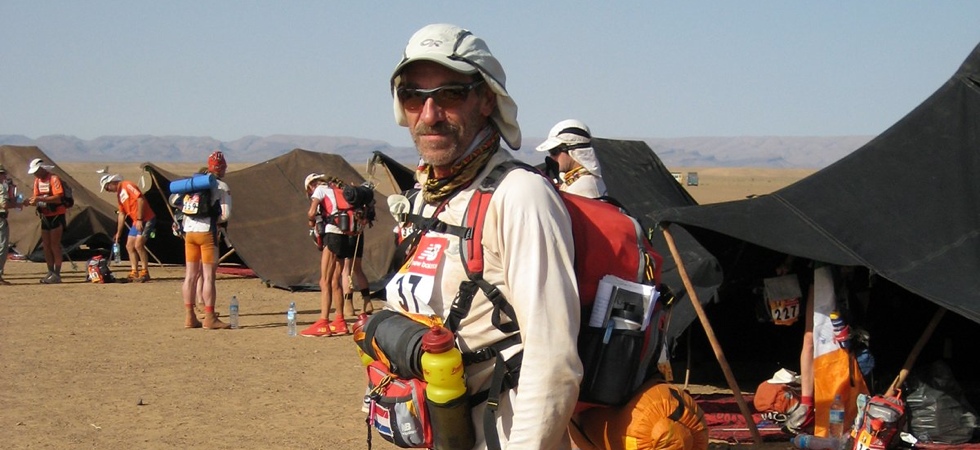
- Marathon des Sables – Sahara Desert (2008)
- North Pole Marathon (2009)
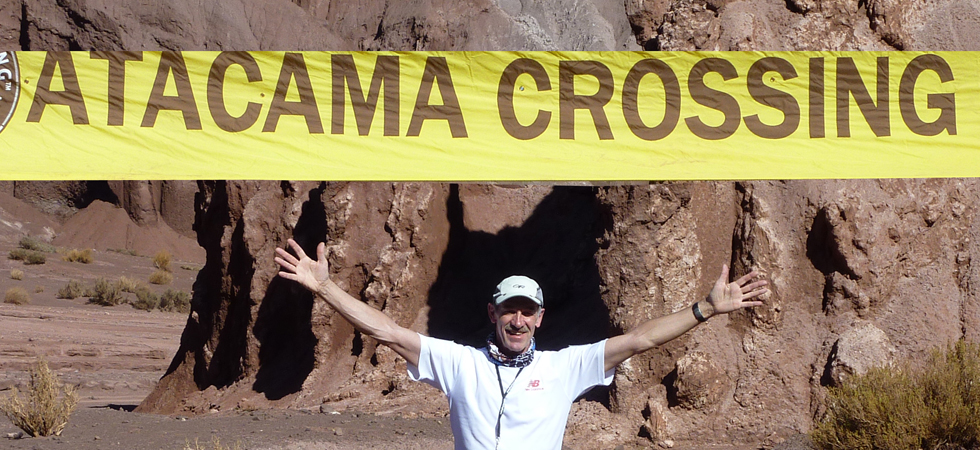
- Atacama Crossing – Chile (2010)
- Mount Everest Marathon – Nepal (2015)
- Antarctica Ice Marathon (2016)
- Great Wall Marathon – China (2017)
...as well as many other international events.
Many ultramarathons are self-supported. Competitors carry their own equipment, including food, clothing, sleeping gear, water and other essentials. Altogether, this can mean carrying a backpack weighing around 12 to 15 kilograms.
For most competitors, these races are not about setting a fast time. There is one overriding goal: to reach the finish line. For days at a time, both body and mind are tested by extreme heat or cold, exhaustion, pain and often exceptionally demanding conditions. For Rob, it was precisely this combination of physical endurance, mental resilience and determination that made these events so compelling.
Marathon Grand Slam
In 2016, Rob made history as the first Dutchman to complete the prestigious Marathon Grand Slam: completing (ultra)marathons on all seven continents as well as at the North Pole. This achievement earned him membership of the exclusive international Marathon Grand Slam Club.
Rob was also the first Dutchman to run a marathon at both the North Pole and the South Pole.
Both races took place in extremely cold conditions. The North Pole Marathon was held in 2009 at Camp Barneo, on the drifting sea ice near the geographic North Pole. During the race, temperatures dropped to -47°C (-53°F).
Seven years later, in 2016, Rob completed the Antarctica Ice Marathon near the Ellsworth Mountains in Antarctica, where the temperature reached -32°C (-26°F).
The End of a Running Career – But Not of Sport
During the COVID-19 pandemic in 2020, Rob ran the Stockholm Marathon virtually in Spain's Sierra Nevada, following a spectacular route from Pradollano to Granada. As it was not an official road race, the roads were not closed to traffic.
Along the way, things went badly wrong. Rob was clipped by a passing truck and quite literally ended up in the gutter. Fortunately, he was able to continue. Despite the delay – and considerable pain – he still managed to complete the marathon.
It was to be his final marathon. After approximately 120,000 kilometres of running, it brought his forty-year running career to an end.
But it certainly did not mean the end of sport. Cycling, walking and fitness have since taken the place of running. His desire to stay active and seek out new challenges remains as strong as ever. Because one thing has never changed: sitting still is simply not an option!
Enjoy exploring this website!